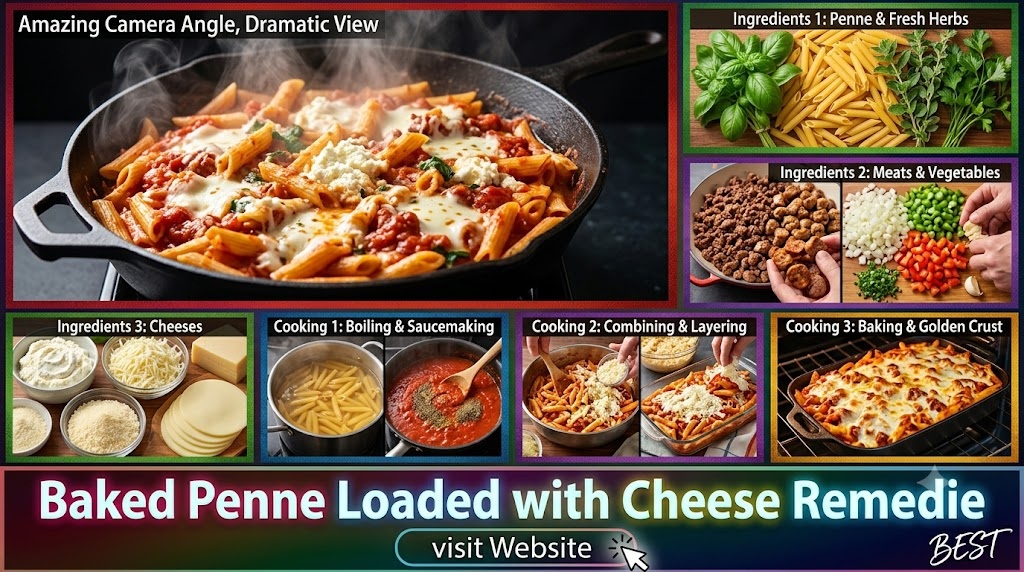
When we talk about a “loaded” pasta bake, we aren’t just talking about dumping a bag of pre-shredded mozzarella over some boiled noodles. We are talking about a calculated layering of textures, a symphony of dairy fats, and the structural integrity of the pasta itself. This recipe is designed to move beyond the cafeteria-style bakes of our youth and into the realm of a restaurant-quality centerpiece. Baked Penne Loaded with Cheese
Introduction
If you’re looking for the ultimate comfort food, Baked Penne Loaded with Cheese is a perfect choice. This hearty pasta dish combines tender penne pasta, rich tomato sauce, creamy cheese, and flavorful seasonings into one irresistible meal. It’s easy to prepare, family-friendly, and ideal for weeknight dinners, potlucks, or holiday gatherings. The golden, bubbly cheese topping makes every bite satisfying and delicious.
Why You’ll Love This Recipe
- Easy to prepare with simple ingredients
- Rich, creamy, and extra cheesy
- Perfect for family dinners
- Great for meal prep and leftovers
- Customizable with vegetables or meat
- Freezer-friendly
Ingredients
For the Pasta
- 1 pound (450g) penne pasta
- Water for boiling
- 1 tablespoon salt
For the Sauce
- 2 tablespoons olive oil
- 1 medium onion, finely chopped
- 3 garlic cloves, minced
- 1 pound ground beef or Italian sausage (optional)
- 24 ounces marinara or pasta sauce
- 2 tablespoons tomato paste
- 1 teaspoon Italian seasoning
- ½ teaspoon dried oregano
- ½ teaspoon basil
- ½ teaspoon black pepper
- Salt to taste
Cheese Mixture
- 1½ cups ricotta cheese
- 2 cups shredded mozzarella cheese
- 1 cup shredded cheddar cheese
- ½ cup grated Parmesan cheese
- 1 egg
- 2 tablespoons chopped parsley
Topping
- 1 cup mozzarella cheese
- ¼ cup Parmesan cheese
- Fresh parsley for garnish
Kitchen Equipment
- Large pot
- Colander
- Mixing bowls
- Skillet
- 9×13-inch baking dish
- Wooden spoon
- Aluminum foil
Step-by-Step Instructions
Step 1: Cook the Pasta
- Bring a large pot of salted water to a boil.
- Cook penne according to package instructions until al dente.
- Drain and set aside.
Step 2: Prepare the Sauce
- Heat olive oil in a skillet.
- Cook onion until soft.
- Add garlic and cook for 30 seconds.
- Add ground beef or sausage if using.
- Cook until browned.
- Stir in tomato paste.
- Add marinara sauce.
- Season with Italian seasoning, oregano, basil, pepper, and salt.
- Simmer for 10–15 minutes.
Step 3: Make the Cheese Filling
In a bowl, combine:
- Ricotta cheese
- Mozzarella
- Cheddar
- Parmesan
- Egg
- Fresh parsley
Mix until smooth.
Step 4: Assemble the Penne Bake
- Preheat oven to 375°F (190°C).
- Grease the baking dish.
- Spread a thin layer of sauce.
- Add half the cooked penne.
- Spoon half of the cheese mixture over the pasta.
- Add more sauce.
- Repeat with remaining pasta and cheese.
- Top with mozzarella and Parmesan.
Step 5: Bake
- Cover with foil.
- Bake for 25 minutes.
- Remove foil.
- Bake another 15–20 minutes until golden and bubbly.
- Let rest for 10 minutes before serving.
How to Serve
Serve hot with:
- Garlic bread
- Caesar salad
- Roasted vegetables
- Steamed broccoli
- Fresh basil garnish
- Extra Parmesan cheese
Recipe Variations
Vegetarian Version
Replace meat with:
- Mushrooms
- Spinach
- Bell peppers
- Zucchini
Spicy Version
Add:
- Crushed red pepper flakes
- Jalapeños
- Spicy Italian sausage
Chicken Version
Use cooked shredded chicken or grilled chicken pieces.
Four Cheese Version
Combine:
- Mozzarella
- Cheddar
- Parmesan
- Provolone
Storage Instructions
Refrigerator
Store in an airtight container for 3–4 days.
Freezer
Freeze for up to 3 months.
Reheating
Bake at 350°F (175°C) for 20 minutes or microwave individual portions until heated through.
Helpful Tips
- Cook pasta slightly underdone so it doesn’t become mushy.
- Use freshly grated cheese for the best melt and flavor.
- Allow the casserole to rest before slicing.
- Add fresh herbs for extra freshness.
- Don’t overbake, as the cheese may dry out.
Nutrition (Approximate Per Serving)
- Calories: 560
- Protein: 28g
- Carbohydrates: 45g
- Fat: 29g
- Fiber: 4g
- Sugar: 7g
- Calcium: 35% Daily Value
Benefits of Baked Penne Loaded with Cheese
Excellent Source of Protein
Cheese and optional meat provide protein that supports muscle growth and helps keep you full.
Rich in Calcium
Mozzarella, ricotta, cheddar, and Parmesan supply calcium, which is essential for healthy bones and teeth.
Provides Energy
Penne pasta is a great source of carbohydrates, giving your body fuel for daily activities.
Family-Friendly Meal
This dish is easy to make in large batches, making it perfect for family dinners, parties, and meal prep.
Customizable
You can easily add vegetables, lean proteins, or whole-grain pasta to suit different dietary preferences.
Frequently Asked Questions
Can I make it ahead of time?
Yes. Assemble the casserole, cover, and refrigerate for up to 24 hours before baking.
Can I freeze it before baking?
Yes. Wrap it tightly and freeze for up to 3 months. Thaw overnight in the refrigerator before baking.
What is the best cheese combination?
A blend of mozzarella, ricotta, cheddar, and Parmesan creates the perfect balance of creaminess, stretch, and flavor.
Can I use gluten-free pasta?
Absolutely. Gluten-free penne works well in this recipe.
Conclusion
Baked Penne Loaded with Cheese is the ultimate comfort-food casserole that combines tender pasta, savory sauce, and layers of melted cheese into one satisfying meal. Whether you’re feeding a family, preparing meals ahead of time, or bringing a dish to a gathering, this cheesy baked pasta is always a crowd-pleaser. Pair it with a fresh salad and garlic bread for a complete, delicious dinner everyone will love.
The magic happens in the “Maillard reaction”—that chemical process where the proteins and sugars in the cheese toast into those savory, crispy brown bits. Combined with a robust, herb-heavy tomato sauce and pasta cooked to a precise al dente, this dish becomes more than a meal; it becomes a sensory experience. Whether you’re feeding a hungry family on a Tuesday or hosting a dinner party where you want everyone to leave slightly more stuffed than they intended, this baked penne is your secret weapon.
The Essential Pantry List: Choosing Your Components
To achieve a professional result, your choice of ingredients is paramount. In my kitchen, we never settle for “good enough.” Every component must earn its place in the dish.
1. The Pasta: Why Penne?
We use Penne Rigate (the ridged version). The ridges are not just for aesthetics; they act as “flavor anchors,” grabbing onto the sauce. The hollow center (the “quill”) serves as a reservoir for the molten cheese and sauce. If you can find bronze-cut pasta, buy it. The rougher surface area creates a better bond with the sauce than the smooth, mass-produced varieties.
2. The Cheese Quintet
A “loaded” dish requires a blend. One cheese cannot do all the heavy lifting.
- Whole Milk Mozzarella: For that iconic, elastic stretch. Avoid part-skim; it doesn’t melt with the same buttery richness.
- Sharp Provolone: This provides a tangy, smoky depth that cuts through the creaminess.
- Ricotta di Bufala: If you can find it, use it. If not, high-quality whole milk ricotta adds creamy “clouds” throughout the bake.
- Pecorino Romano: For a salty, sharp punch that wakes up the palate.
- Fontina: Known as the ultimate melting cheese, it adds a silky, nutty undertone.
3. The Aromatics
Don’t just use dried oregano from a jar that’s been in your cabinet since 2019. We want fresh garlic (smashed and minced), shallots for sweetness, and a touch of red pepper flakes for a subtle heat that lingers on the back of the tongue.
4. The Sauce Base
While you can use a high-end jarred marinara in a pinch, I always recommend a base of San Marzano tomatoes. Their low acidity and natural sweetness are the gold standard for Italian-American cooking.
Kitchen Gear: The Tools of the Trade
Before we light the burners, let’s talk about the hardware. A chef is only as good as their tools.
- 9×13 Inch Ceramic or Cast Iron Baker: These materials retain heat better than glass, ensuring the bottom of your pasta stays warm while the top gets crispy.
- Large Stockpot: You need plenty of water for the pasta. If the pot is too small, the starch concentration gets too high, leading to gummy noodles.
- Microplane: For grating that Pecorino and garlic. A fine zest makes a world of difference.
- Spider Strainer: I prefer this over a colander. It allows you to move the pasta directly from the water to the sauce, bringing a bit of that “liquid gold” (pasta water) along with it.
The Master Method: Step-by-Step Execution
Phase 1: The Pasta Foundation
Start by bringing a large pot of water to a rolling boil. Here is the first professional secret: salt the water like the sea. It should taste like a seasoned soup. The pasta will only be in the water for about 6-7 minutes. We want it very firm—almost undercooked. Why? Because it will finish cooking in the oven, absorbing the moisture from the sauce. If you cook it to “tender” in the pot, it will be mush in the oven.
Phase 2: The Sauce Development
In a heavy-bottomed skillet, sauté your finely minced shallots and garlic in high-quality extra virgin olive oil. Once translucent, add your crushed San Marzano tomatoes. Season with salt, black pepper, and a pinch of sugar to balance the acidity. Let this simmer for at least 20 minutes. This isn’t just about heating it up; it’s about reducing the water content so the flavor intensifies. Stir in fresh basil at the very end to preserve its bright, peppery profile.
Phase 3: The Ricotta Mixture
In a medium bowl, combine your ricotta with one egg, a handful of Pecorino Romano, and chopped flat-leaf parsley. The egg acts as a binder, preventing the ricotta from becoming grainy or watery when it hits the high heat of the oven. This creates those beautiful, creamy pockets that contrast the gooey mozzarella.
Phase 4: The Assembly
This is where the architecture of the dish comes into play.
- The Base: Smear a thin layer of sauce at the bottom of your baking dish. This prevents the bottom layer of penne from sticking or drying out.
- The First Layer: Toss your undercooked penne with half of the sauce and half of your shredded mozzarella and provolone. Dump half of this mixture into the pan.
- The Creamy Center: Dollop the ricotta mixture evenly across the pasta. Do not spread it thin; you want concentrated bursts of creaminess.
- The Final Layer: Add the remaining pasta. Top with the rest of the sauce, and then—the pièce de résistance—cover the entire top with a thick, even layer of the remaining cheeses (Mozzarella, Provolone, Fontina, and a final dusting of Pecorino).
Phase 5: The Bake
Cover the dish with foil, but here’s a pro tip: spray the underside of the foil with non-stick spray so it doesn’t pull the cheese off when you remove it. Bake at 375°F for 20 minutes. Remove the foil and crank the heat to 425°F (or hit the broiler) for the last 5-10 minutes. You are looking for a “leopard-spotted” crust—deep brown spots amid a sea of golden yellow.
The Science of the Sauce: Why a Homemade Base Wins
In the culinary world, we often talk about “layering flavors.” A store-bought sauce is a monochromatic flavor profile; it tastes the same from the first bite to the last. When you build a sauce from scratch for your Baked Penne Loaded with Cheese, you are creating a spectrum of taste.
By sautéing the garlic slowly, you develop sweetness. By adding red pepper flakes to the hot oil (infusing the fat), you ensure the heat is distributed evenly. By using San Marzano tomatoes, you get a thicker pulp that clings to the penne rather than sliding off. This structural integrity is what separates a “soggy” bake from a “substantial” one.
Elevating Your Cheese Selection
While the “Quintet” mentioned earlier is a classic approach, as a chef, I encourage experimentation. The “Loaded” aspect of this recipe implies an abundance, but it should also imply complexity.
- The Funk Factor: If you want a more adult flavor profile, swap out the Provolone for a bit of Taleggio. It’s a washed-rind cheese that smells strong but melts into a mild, fruity dream.
- The Smoke Factor: Smoked Mozzarella (Scamorza) can add a campfire-like depth that pairs beautifully with a spicy tomato sauce.
- The Cream Factor: For an ultra-luxurious version, some chefs whisk a bit of heavy cream into the tomato sauce before tossing it with the pasta. This creates a “pink sauce” or “alla Vecchia Bettola” style base that is incredibly decadent.
Chef’s Tips for Success
- Fresh Grating Only: I cannot stress this enough. Pre-shredded cheese is coated in potato starch or cellulose to keep it from clumping in the bag. This coating prevents the cheese from melting into a cohesive, gooey mass. Buy the blocks and grate them yourself. Your forearm might get a workout, but your palate will thank you.
- Temper Your Ricotta: Let your ricotta sit out for 20 minutes before mixing. If it’s ice-cold, it can lower the temperature of the internal bake, leading to uneven cooking.
- The Resting Period: This is the hardest part. Once the penne comes out of the oven, wait 10 minutes. If you cut into it immediately, the cheese is too fluid and the sauce will run to the bottom. Resting allows the starches to settle and the cheese to “set,” giving you those clean, beautiful portions.
Common Mistakes to Avoid
- Rinsing the Pasta: Never, ever rinse your pasta. You want that residual starch on the surface; it’s the “glue” that helps the sauce and cheese stick to the penne.
- Overcrowding the Pan: If your pasta is packed too tightly, the heat won’t penetrate the center, and you’ll end up with cold spots. Use a large enough dish so the pasta has room to “breathe.”
- Skimping on the Sauce: Pasta is a sponge. It will continue to absorb liquid as it bakes. If the mixture looks “perfectly sauced” before it goes in, it will likely be dry when it comes out. It should look slightly “too wet” before baking.
Pro-Level Tweaks and Customizations
Once you’ve mastered the base recipe, you can start treating it like a canvas.
- The Meat Lover’s Version: Brown some spicy Italian sausage (casing removed) or ground wagyu beef. Drain the excess fat and mix it into the sauce. The rendered pork fat from the sausage adds an incredible savory note.
- The Garden Version: Fold in sautéed baby spinach or roasted red peppers. The key is to cook the vegetables first to remove their moisture. If you put raw spinach in, it will release water and make your bake “soupy.”
- The Truffle Touch: A drizzle of high-quality white truffle oil just before serving can elevate this humble dish to a gourmet experience.
Avoiding the “Oily Mess” Trap
One of the biggest complaints with “loaded” cheese dishes is a layer of orange oil sitting on top. This happens when the cheese breaks (separates) due to excessive heat or low-quality fats.
To avoid this:
- Keep your oven temperature consistent.
- Use a mix of high-moisture (Mozzarella) and hard (Pecorino) cheeses.
- Ensure your tomato sauce is well-emulsified with a bit of olive oil before mixing with the pasta. The oil in the sauce helps keep the cheese fats in check.
Meal Prep and Storage Logistics
This dish is a meal-prepper’s dream. In fact, many would argue (myself included) that it tastes better the next day.
- Make-Ahead: You can assemble the entire dish up to 24 hours in advance. Keep it tightly wrapped in the fridge. When you’re ready to eat, add an extra 10-15 minutes to the “covered” portion of the baking time to ensure the center gets hot.
- Freezing: This freezes exceptionally well. I recommend freezing it in individual portions. Wrap tightly in plastic wrap and then foil. To reheat, go straight from the freezer to a 350°F oven (remove the plastic wrap first, obviously!) for about 30-40 minutes.
- Reheating: Avoid the microwave if possible; it makes the cheese rubbery. A toaster oven or a standard oven at 300°F with a splash of water or extra sauce will revive the texture perfectly.
Pairing Guide: Beyond the Garlic Bread
While garlic bread is the traditional partner, let’s look at some professional pairings to round out the meal.
- The Salad: A crisp, acidic salad is necessary to cut through the richness of the cheese. Think of a classic Caesar with a heavy lemon hit, or an Arugula salad with a sharp balsamic vinaigrette and shaved fennel.
- The Wine: You need something with high acidity and moderate tannins. A Chianti Classico or a Barbera d’Asti works wonders. The acidity of the wine mimics the acidity of the tomatoes and cleanses the palate of the heavy cheese fats.
- The Vegetable: Roasted broccolini with lemon zest and red pepper flakes provides a bitter contrast that complements the sweet, rich pasta.
Nutrition Information (Per Serving – Estimated)
Disclaimer: This is a decadent comfort dish. Life is about balance!
- Calories: 580 kcal
- Total Fat: 28g
- Saturated Fat: 15g
- Cholesterol: 85mg
- Sodium: 920mg
- Total Carbohydrates: 54g
- Dietary Fiber: 4g
- Sugars: 6g
- Protein: 29g
Frequently Asked Questions
Q: Can I use whole wheat penne? A: You can, but be aware that whole wheat pasta has a stronger, nuttier flavor and a more fibrous texture. It won’t absorb the sauce quite the same way as semolina pasta. If you go this route, increase the sauce amount by about 10% to prevent dryness.
Q: Why is my cheese not browning? A: This usually happens if your oven isn’t calibrated correctly or if you’re using a cheese with very high moisture content. If the cheese is melted but pale, move the rack to the top position and turn on the broiler for 60-90 seconds. Don’t walk away! It can go from perfect to burnt in a heartbeat.
Q: Can I use cottage cheese instead of ricotta? A: In a pinch, yes, but the texture will be different. Cottage cheese has more liquid and a lumpier curd. If you use it, I recommend pulsing it in a food processor first to get a smoother consistency, and make sure to drain any excess whey.
Q: Is it okay to use dried herbs? A: Dried herbs are great for the simmering sauce (use about 1/3 of the amount you would use for fresh). However, for the final garnish and the ricotta mixture, fresh herbs provide a “top note” of flavor that dried herbs simply cannot match.
Q: How do I stop the pasta from sticking to the bottom of the pan? A: That initial layer of sauce at the bottom of the dish is key. Think of it as a lubricant. Also, ensure your pasta is tossed thoroughly in sauce before it hits the pan; “naked” pasta is what sticks.
Q: Can I use other pasta shapes? A: Absolutely. Rigatoni is a fantastic alternative because of its large diameter. Ziti is the classic “Baked Ziti” choice, though it lacks the ridges of penne. Even Fusilli works well as the spirals trap the cheese. Just avoid long strands like Spaghetti or Linguine, as they don’t provide the structural support needed for a layered bake.
Q: What if my sauce is too acidic? A: Sometimes canned tomatoes can be a bit harsh. A tiny pinch of baking soda can neutralize the acid, or a small amount of sugar can balance it out. Another chef’s trick is to drop a whole peeled carrot into the sauce while it simmers; the carrot absorbs the acidity and adds a subtle sweetness. Remove the carrot before assembling.
Q: How do I make the topping extra crunchy? A: Mix half a cup of Panko breadcrumbs with a tablespoon of melted butter and a sprinkle of Parmesan. Scatter this over the cheese layer before baking. It adds a “shatter-crisp” texture that is addictive.
Q: Why did my sauce turn watery after baking? A: This is usually caused by two things: under-cooking the sauce (not letting it reduce enough) or using low-quality ricotta that hasn’t been drained. If your ricotta looks watery in the container, let it sit in a fine-mesh strainer over a bowl for 30 minutes before using.
Q: Can I add wine to the sauce? A: Please do! A splash of dry red wine (like Cabernet or Merlot) after sautéing the aromatics but before adding the tomatoes adds a wonderful “grown-up” complexity. Just make sure to cook off the alcohol for 2-3 minutes first.
The Psychology of Comfort Food: Why We Crave This
As a professional in the food industry, I often contemplate why certain dishes endure through generations. Baked Penne Loaded with Cheese isn’t just about nutrition; it’s about a feeling. It represents the “hearth.” It is a dish designed for sharing, for passing around a large table, for the sound of forks scraping against ceramic.
The combination of carbohydrates and fats triggers a dopamine response, but it’s the communal nature of the casserole that cements its status. It is a “one-pot” wonder that suggests warmth, safety, and abundance. In a world of fast food and “sad desk lunches,” taking the time to layer cheeses and simmer a sauce is an act of love—for yourself, or for those you’re feeding.
A Note on Quality Over Quantity
While we call this dish “loaded,” that doesn’t mean we should be reckless. In culinary school, we are taught the “Golden Ratio.” You want enough cheese to be indulgent, but not so much that it overwhelms the flavor of the tomatoes or the texture of the pasta. The recipe provided here strikes that balance. Every bite should give you a bit of everything: the chew of the pasta, the brightness of the sauce, the creaminess of the ricotta, and the salty crust of the mozzarella.
Final Thoughts
Creating the ultimate Baked Penne Loaded with Cheese is a rite of passage for any home cook and a staple for any professional. It requires patience in the sauce-making, precision in the pasta-boiling, and a bit of bravery when it comes to that final broiler blast.
By following these chef-driven techniques—specifically the use of a cheese blend, the “under-cooking” of the pasta, and the layering of the ricotta—you are ensuring a result that is leagues above the average bake. This is a dish that invites seconds (and thirds), and one that will surely become a requested favorite in your household.
So, put on your apron, preheat that oven, and get ready to experience the most decadent, cheesy, and satisfying pasta bake of your life. Remember, the secret isn’t just in the ingredients, but in the care you take in assembling them. Happy cooking, and even happier eating!
